• Home
  • About Us
  • Services
  • Contact Us

When buyers compare rigid strapping tape quotes, they usually check width, length, and price first. The edge style — zigzag or straight — rarely makes the shortlist. It should. Edge style determines how the tape tears, how it behaves mid-application, and in some markets it is a hard product requirement. Get it wrong, and the tape your customer receives will feel wrong even if every other spec is identical.

This guide breaks down the difference between zigzag and straight edge rigid tape, what to specify for your market, and how to order it right the first time.

Zigzag vs Straight Edge: What’s the Difference

Rigid strapping tape is manufactured as wide sheeting, then slit into rolls. The edge style is set at the slitting stage:

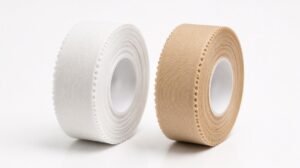
  • Zigzag (scalloped) edge. The tape is slit with a wavy or scalloped profile. Zigzag edges are designed for hand tearing — the wave creates a natural tear point, so you can rip a clean strip off the roll without scissors. This is the traditional edge for Australian-style strapping tape and is widely expected by sports medicine users across Australia, the UK, and Europe.
  • Straight edge. The tape is slit in straight parallel lines. Strips must be cut or torn across a straight line, which suits users who work from pre-cut lengths or prefer a clean uniform edge for every application.

Neither is “better” in absolute terms — the right choice depends on how your end users apply the tape.

Why Edge Style Matters for Your Customers

For a clinic, sports team, or athlete, the edge style affects daily workflow:

  • Hand-tear preference. Therapists taping multiple athletes in a row want rolls that tear fast with one motion. Zigzag edge rigid tape delivers that — no scissors, no downtime between applications.
  • Strip consistency. If your customer cuts precise pre-cut lengths (for wrists, fingers, or ankles), straight edge gives uniform strips and less waste at the roll end.
  • Market expectation. Australian-style zigzag edge is the standard format in many export markets, especially for rayon-based rigid tape sold through sports medicine distributors. If your market expects zigzag and you ship straight edge, returns follow.

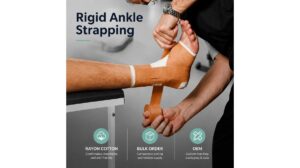
Rigid strapping tape applied to an ankle with figure-eight and stirrup wrapping

Sizes, Lengths & Materials to Specify

Rigid strapping tape comes in a consistent range of formats. When you brief a supplier, confirm:

  • Widths. Common widths are 2.5 cm, 3.8 cm, 5 cm, and 7.5 cm. 5 cm is the workhorse width for ankles and wrists; 2.5 cm suits fingers and smaller joints.
  • Lengths. Standard rolls run 10 m or 13.7 m. Longer rolls reduce per-metre cost and repacking frequency for distributors.
  • Materials. Cotton and rayon are the two main constructions. Rayon rigid tape is finer-woven and conforms tightly around joints, which is why it dominates the Australian-style segment; 100% cotton offers a heavier, more textured feel preferred by some clinical users. Both can be zinc oxide coated for strong adhesion.
  • Adhesive. Zinc oxide coating is the benchmark for rigid strapping tape — it grips through sweat and holds during activity, then removes without leaving heavy residue.

Rigid strapping tape in use during climbing with taped wrists

Certification & Sourcing Checks

Before you commit to a wholesale order, verify the factory’s documentation:

  • CE / ISO certification on the product line (rigid strapping tape is sold into medical and clinical channels in many markets, where certification is a non-negotiable requirement).
  • Zinc oxide adhesive quality — request samples and test removal residue; cheap adhesive fails on both hold and clean removal.
  • Consistent slitting — zigzag edge must be uniform across the roll; uneven slitting creates weak tear points that split mid-use.

MOQ, Lead Time & Customization

Rigid strapping tape is a low-complexity product to source, but plan around the basics: typical wholesale MOQs run in the low hundreds of rolls (for example, 144–192 rolls per spec), standard production lead times are 20–30 days, and customization options include printed cores, printed rolls, and custom packaging for private-label brands. If you need a specific width/length combo or a custom color, confirm tooling before ordering.

Order Rigid Strapping Tape from the Factory

ActiveX is an OEM/ODM manufacturer of sports and medical adhesive tapes with our own factory and CE/ISO certified production. Our rigid strapping tape line includes Australian-style rayon zinc oxide tape with hand-tear zigzag edge in 5 cm, rayon rigid tape in 38 mm x 13.7 m, and cotton options — all with flexible MOQ, 20–30 day lead times, and OEM customization.

View our Australian Style Zigzag Edge Rigid Strapping Tape on Alibaba, browse our full Alibaba store, or explore our rigid tape ranges and cotton tape specs on our website. For samples and wholesale pricing, email mani@activextape.com.

Images courtesy of ActiveX Alibaba International Store product listings.

When buyers compare rigid strapping tape quotes, they usually check width, length, and price first. The edge style — zigzag or straight — rarely makes the shortlist. It should. Edge style determines how the tape tears, how it behaves mid-application, and in some markets it is a hard product requirement. Get it wrong, and the tape your customer receives will feel wrong even if every other spec is identical.

This guide breaks down the difference between zigzag and straight edge rigid tape, what to specify for your market, and how to order it right the first time.

Zigzag vs Straight Edge: What’s the Difference

Rigid strapping tape is manufactured as wide sheeting, then slit into rolls. The edge style is set at the slitting stage:

  • Zigzag (scalloped) edge. The tape is slit with a wavy or scalloped profile. Zigzag edges are designed for hand tearing — the wave creates a natural tear point, so you can rip a clean strip off the roll without scissors. This is the traditional edge for Australian-style strapping tape and is widely expected by sports medicine users across Australia, the UK, and Europe.
  • Straight edge. The tape is slit in straight parallel lines. Strips must be cut or torn across a straight line, which suits users who work from pre-cut lengths or prefer a clean uniform edge for every application.

Neither is “better” in absolute terms — the right choice depends on how your end users apply the tape.

Why Edge Style Matters for Your Customers

For a clinic, sports team, or athlete, the edge style affects daily workflow:

  • Hand-tear preference. Therapists taping multiple athletes in a row want rolls that tear fast with one motion. Zigzag edge rigid tape delivers that — no scissors, no downtime between applications.
  • Strip consistency. If your customer cuts precise pre-cut lengths (for wrists, fingers, or ankles), straight edge gives uniform strips and less waste at the roll end.
  • Market expectation. Australian-style zigzag edge is the standard format in many export markets, especially for rayon-based rigid tape sold through sports medicine distributors. If your market expects zigzag and you ship straight edge, returns follow.

Rigid strapping tape applied to an ankle with figure-eight and stirrup wrapping

Sizes, Lengths & Materials to Specify

Rigid strapping tape comes in a consistent range of formats. When you brief a supplier, confirm:

  • Widths. Common widths are 2.5 cm, 3.8 cm, 5 cm, and 7.5 cm. 5 cm is the workhorse width for ankles and wrists; 2.5 cm suits fingers and smaller joints.
  • Lengths. Standard rolls run 10 m or 13.7 m. Longer rolls reduce per-metre cost and repacking frequency for distributors.
  • Materials. Cotton and rayon are the two main constructions. Rayon rigid tape is finer-woven and conforms tightly around joints, which is why it dominates the Australian-style segment; 100% cotton offers a heavier, more textured feel preferred by some clinical users. Both can be zinc oxide coated for strong adhesion.
  • Adhesive. Zinc oxide coating is the benchmark for rigid strapping tape — it grips through sweat and holds during activity, then removes without leaving heavy residue.

Rigid strapping tape in use during climbing with taped wrists

Certification & Sourcing Checks

Before you commit to a wholesale order, verify the factory’s documentation:

  • CE / ISO certification on the product line (rigid strapping tape is sold into medical and clinical channels in many markets, where certification is a non-negotiable requirement).
  • Zinc oxide adhesive quality — request samples and test removal residue; cheap adhesive fails on both hold and clean removal.
  • Consistent slitting — zigzag edge must be uniform across the roll; uneven slitting creates weak tear points that split mid-use.

MOQ, Lead Time & Customization

Rigid strapping tape is a low-complexity product to source, but plan around the basics: typical wholesale MOQs run in the low hundreds of rolls (for example, 144–192 rolls per spec), standard production lead times are 20–30 days, and customization options include printed cores, printed rolls, and custom packaging for private-label brands. If you need a specific width/length combo or a custom color, confirm tooling before ordering.

Order Rigid Strapping Tape from the Factory

ActiveX is an OEM/ODM manufacturer of sports and medical adhesive tapes with our own factory and CE/ISO certified production. Our rigid strapping tape line includes Australian-style rayon zinc oxide tape with hand-tear zigzag edge in 5 cm, rayon rigid tape in 38 mm x 13.7 m, and cotton options — all with flexible MOQ, 20–30 day lead times, and OEM customization.

View our Australian Style Zigzag Edge Rigid Strapping Tape on Alibaba, browse our full Alibaba store, or explore our rigid tape ranges and cotton tape specs on our website. For samples and wholesale pricing, email mani@activextape.com.

Images courtesy of ActiveX Alibaba International Store product listings.

Send Us Your Inquiry

    In CrossFit boxes, weightlifting platforms, and HYROX events, thumb tape is a consumable with a simple job: protect the thumb during hook grip lifts. Deadlifts, cleans, snatches, pull-ups and sled work all load the thumb through the grip, and without protection, the skin tears, blisters, and bleeds mid-session. For gym brands, PT studios, and supplement retailers that sell training accessories, thumb tape is a predictable repeat-purchase line — but only if the spec is right.

    This guide covers what to specify when sourcing thumb tape for CrossFit and weightlifting customers, plus the OEM options that let you put your own brand on the roll.

    Unlike one-off equipment purchases, tape is consumed weekly — an athlete training four to five days a week can use a 3-pack in a month. That recurring demand is what makes the category attractive for distributors: it builds predictable reorder volume and opens the door to upselling other training accessories once the brand relationship exists.

    Why Hook Grip Makes Thumb Tape Essential

    The hook grip — where the thumb wraps under the bar and the fingers lock over it — transfers most of the load through the thumb. On heavy pulls, the bar’s knurling grinds against the thumb skin. Without protection, athletes deal with:

    • Torn and split thumbs after high-rep sessions
    • Blisters that end training early
    • Compromised grip when the thumb slips under load

    Thumb tape acts as a sacrificial layer between skin and bar. It needs to stay put through sweat and chalk, flex with the thumb, and tear off cleanly when the session ends. That combination — strong adhesion, flexibility, and hand-tearability — is the baseline for any product worth stocking.

    Thumb Tape Specs: Width, Length & Adhesive

    The dominant format for CrossFit and Olympic lifting is a narrow roll, typically 5 cm wide and 4.5 m long, sized for thumb-length strips and easy packing. When sourcing, verify these points:

    • Width and length. 5 cm x 4.5 m is the standard retail configuration, with 3-roll packs the most common purchase unit. Some buyers prefer wider rolls (7.5 cm+) for multiple uses per roll.
    • Adhesive performance. The tape must hold through sweat and chalk on the thumb — “strong adhesive for sweaty conditions” is the spec gym brands actually ask for. Check that it applies smoothly and removes without leaving residue.
    • Skin safety. Latex-free, breathable cotton construction matters for all-day contact with skin and for customers with sensitivities.
    • Tear quality. Athletes tear strips one-handed mid-set; the tape should tear straight without tools.

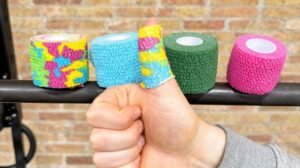
    3-roll thumb tape pack: 5cm x 4.5m, black-orange-yellow rolls

    Retail Formats: Single, 3-Pack & Bulk

    How you package thumb tape shapes who buys it:

    • 3-roll packs are the sweet spot for retail — athletes burn through rolls fast, and a 3-pack reads as value without bloating shelf price.
    • Single rolls suit gym counter sales and impulse buys at the front desk.
    • Bulk rolls for gyms — boxes of rolls for boxes and PT studios that supply members directly.

    For e-commerce, 3-packs also lift average order value and reduce per-unit shipping cost, which is why most D2C tape brands lead with them.

    OEM Customization: Colors, Logo & Packaging

    Thumb tape is one of the easiest accessories to private-label, because the manufacturing variables are few and the brand surface is large:

    • Colorways. From black and white basics to camo patterns and neon tones that match a gym’s branding.
    • Logo printing. Fabric logo print directly on the tape, or logo stickers on the roll core — both are standard options. Printed tape is the premium route: every strip an athlete tears off carries your brand.
    • Custom packaging. Printed cores, custom boxes, or multi-roll sleeve packs with your artwork.

    Custom logo demo: fabric logo print and logo sticker options for private label thumb tape

    What to Check Before You Order

    • Confirm width and length match your target market (5 cm x 4.5 m 3-pack is the benchmark).
    • Verify adhesive performance claims with samples — sweat and chalk are the real test.
    • Confirm latex-free status and skin-safe materials for retail liability.
    • Decide branding: printed tape vs sticker, custom colors, pack format.
    • Check MOQ, sampling time, and lead time with the factory before committing.

    Source Thumb Tape Directly from the Factory

    ActiveX is an OEM/ODM manufacturer of sports and medical adhesive tapes with our own factory, ISO/FDA/CE certified production, and direct export experience with gym and sports brands in the US, UK, Australia, Spain and beyond. Our thumb tape line includes wholesale rolls for CrossFit and HYROX gyms, hook grip tape for runners and weightlifters, breathable cotton and anti-slip options — all available with OEM custom logo printing.

    View our Wholesale Thumb Tape Roll for CrossFit & HYROX on Alibaba International, browse our full Alibaba store, or see the thumb tape and EAB range on our website. For samples and wholesale pricing, email mani@activextape.com.

    Images courtesy of ActiveX Alibaba International Store product listings.

    Send Us Your Inquiry

      Finger tape is one of the most reliable repeat-purchase categories in the grappling market. Brazilian Jiu-Jitsu, Judo, and wrestling athletes go through rolls every week — taping their fingers before every session to protect knuckles and joints from grip strain. For sports brands, gym retailers, and distributors, it is a volume line with loyal buyers and strong margins.

      This guide covers what to specify when sourcing BJJ finger tape: widths, materials, adhesive performance, custom printing, and packaging.

      Why Grapplers Tape Their Fingers

      Grappling sports put extraordinary stress on the hands. Gripping a gi, wrestling for control, and repeatedly breaking grips strain the finger joints — especially the middle knuckles. Over time, this causes the joint swelling and stiffness that long-time grapplers are known for. Finger tape is the athlete’s first line of defense:

      • Joint protection. Taping restricts extreme joint movement during training, reducing the risk of sprains and hyperextension.
      • Skin protection. Tape reduces friction on knuckles and fingers, preventing rips and callus tears from gi fabric.
      • Training frequency. Competitive grapplers train 4-6 times a week; taping is part of the daily routine, which drives steady reorders.

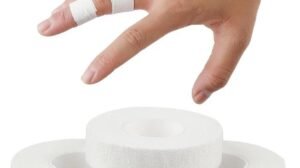
      Athlete wrapping a finger with black athletic tape during a BJJ training session

      For a buyer, the demand is consistent year-round — finger tape is not seasonal, and it does not depend on trends.

      Widths & Materials: Picking the Right Specs

      Finger tape is produced in narrow widths designed for digits, with two standard material constructions.

      Common widths:

      • 5 mm — for thumb and small finger wraps, and precise knuckle protection
      • 8 mm — a popular middle-ground size, widely used for fingers and knuckles
      • 10 mm — the most common all-purpose finger tape width for BJJ and climbing
      • 12.5 mm — for larger hands, double wraps, and athletes who prefer wider coverage

      Materials:

      • Cotton finger tape — soft hand feel, good conformability, and a natural breathable weave. Preferred by athletes who tape daily and want comfort on the skin.
      • Rayon finger tape — a smoother, slightly stronger construction with a premium feel and clean tear characteristics.

      Both are typically coated with a zinc oxide adhesive, hand-tearable, and designed to hold through sweat-heavy training sessions while removing cleanly.

      Adhesive, Edge & Skin Comfort

      The performance details matter more in finger tape than in most tapes, because the product sits on the most sensitive part of the hand:

      • Zinc oxide adhesive gives firm grip on the finger without shifting during intense gripping.
      • Hand-tearable construction lets athletes apply tape in seconds between rounds — no scissors on the mat.
      • No-latex options reduce skin irritation for daily users; hypoallergenic variants are a growing request from gyms and clubs.
      • Clean removal without sticky residue matters for athletes who tape every session — a sticky mess is a common complaint with low-quality tape.

      Multiple rolls of black athletic tape on a white background

      Custom Printing & Packaging

      Finger tape is a natural private-label product — small, affordable, and bought repeatedly by loyal customers. Brands differentiate with:

      • Custom colors — black, white, skin tone, or brand-matched colors
      • Logo printing on the tape — print your brand name or pattern directly on the tape surface, visible on every roll
      • Printed cores and packaging — branded inner cores, printed paper tubes, and custom boxes or tins
      • Multi-pack formats — 3-roll and 6-roll packs, tin boxes, or gym-sized bulk bundles
      • Private label — put your brand on the product and packaging while the factory handles production

      For a gym brand or combat sports label, a branded finger tape line is one of the lowest-cost ways to put your name in athletes’ hands every training day. See how the format works in our finger tape tin OEM guide.

      Wholesale Checklist Before You Order

      • Confirm width mix: 5 mm, 8 mm, 10 mm, and 12.5 mm demand in your market (10 mm is the volume size)
      • Choose material: cotton for comfort, rayon for premium feel — or stock both
      • Specify adhesive: zinc oxide, hand-tearable, no-latex if your market needs it
      • Plan branding: custom colors, tape printing, core printing, packaging
      • Confirm MOQ, sample process, and lead time with the factory

      Source BJJ Finger Tape from the Factory

      Finger tape is the kind of product that builds a brand through everyday use — athletes see your logo every time they train. ActiveX manufactures cotton and rayon finger tape in widths from 5 mm to 12.5 mm, with zinc oxide adhesive, custom colors, logo printing, and packaging options, plus flexible MOQ and export experience across more than 30 countries.

      Browse our sports tape range on our Alibaba International Store, see the full finger tape specifications on our site, or contact us at mani@activextape.com for samples and wholesale pricing.

      Send Us Your Inquiry

        For brands building diabetes wearables, CGM accessories, or sensor protection lines, the patch is the most visible part of the product. Users wear it on their skin for 7 to 14 days at a time, through showers, workouts, and sleep. A generic, off-the-shelf patch makes your product feel generic. A custom patch — shaped for your sensor, printed with your brand, and engineered for your users’ skin — turns an accessory into a reason to stay.

        This guide covers what device brands and wellness brands can customize, what to specify when briefing a manufacturer, and how to source custom CGM patches at a volume that fits your stage.

        Why Custom CGM Patches Matter

        Three forces push brands toward custom patches rather than stock designs:

        • Differentiation. The CGM accessory market is growing fast, and shelf space is crowded. Custom shapes, colors, and printed branding make your product recognizable at a glance — in retail, online, and in unboxing photos.
        • Sensor fit. Every CGM sensor family has its own geometry and insertion point. A patch cut for the right model holds better, aligns correctly, and reduces user error during application.
        • User retention. Patch comfort and adhesion are the top reasons users keep or abandon a CGM setup. A patch that stays secure for the full wear window — and removes cleanly — protects both the sensor investment and the brand relationship.

        What Can Be Customized

        A full-service CGM patch manufacturer can customize nearly every aspect of the product:

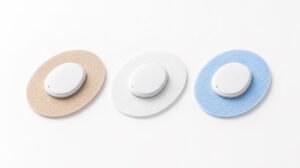
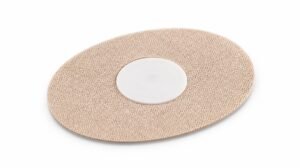
        • Shape & size. Patches cut to match specific sensor models, or universal shapes that fit multiple models in your portfolio. Common formats include full-coverage over-patches, donut-shaped patches that expose the sensor, and pre-cut strips.
        • Material. Breathable non-woven, cotton, and elastic fabrics with different moisture management properties — matched to wear duration and user activity.
        • Adhesive. Waterproof adhesive systems that hold through swimming and showers, skin-friendly formulations for sensitive skin, and residue-free removal options.
        • Color & printing. Custom colors, logo printing, and pattern printing directly on the patch surface.
        • Packaging. Private-label packaging, custom pouches, and multi-pack formats for retail or subscription models.

        Compatibility: Designed Around the Sensor

        Custom patches are typically developed around the major sensor families:

        • Dexcom G6 and G7 over-patches
        • Freestyle Libre 1, 2, 3, and PLUS patches
        • Universal cotton sensor patches for multi-sensor use

        When you source from a factory that already produces patches for these formats, the development cycle is shorter — existing tooling and adhesives can be adapted to your brand rather than designed from scratch.

        Private Label: From Generic Accessory to Branded Product

        For many wellness and medical brands, the CGM patch line is their first step into the diabetes accessory market — and private label is the fastest way to build it. Instead of investing in production equipment, you specify the product and put your name on it:

        • Your brand, not a commodity. Custom colors and printed logos on the patch, plus branded packaging, let you sell at a premium over unbranded stock patches.
        • A complete retail story. Patch + branded pouch + instructions + subscription packaging creates a product that belongs on a shelf or in a DTC offer, not just a spare part.
        • Low entry cost. Because the factory already owns the tooling for the major sensor formats, private-label runs start at volumes that make sense for new entrants — and scale up as your orders grow.

        The brands that win in this category treat the patch as a product line, not a consumable — and that starts with a partner who can print, cut, package, and ship to their spec.

        What to Specify When You Brief a Manufacturer

        Before you contact suppliers, prepare this specification set — it shortens quoting and sampling dramatically:

        • Target wear duration (7, 10, or 14 days) — this drives adhesive selection
        • Sensor model(s) the patch must fit
        • Adhesive requirements: waterproof, skin-friendly, residue-free removal
        • Material and breathability requirements (sweat, shower, exercise resistance)
        • Shape and size: over-patch, donut, or pre-cut format
        • Branding: colors, logo printing, pattern printing
        • Packaging format: pouch, retail box, multi-pack
        • Certification and documentation needed for your market
        • MOQ, sampling process, and lead time

        Source Custom CGM Patches from the Factory

        The custom CGM patch line is a low-risk way to enter the diabetes wearable accessory market — or to upgrade an existing product without redesigning your sensor. With the right factory partner, you get custom shapes, adhesives, printing, and private-label packaging under one roof, with flexible MOQ for startups and scaling brands alike.

        ActiveX manufactures custom CGM sensor patches — including Dexcom G6/G7 and Freestyle Libre-compatible formats — with waterproof, skin-friendly adhesives, custom shape, color and printing options, and export experience across more than 30 countries. See our Universal Cotton CGM Sensor Patch on Alibaba for the current format and specifications, explore the CGM patch page on our site, or read our CGM patch market trends guide for the market context. For samples and wholesale pricing, contact us at mani@activextape.com.

        Cohesive bandage and elastic adhesive bandage (EAB) look similar on the shelf — both are elastic wraps on a roll, both are hand-tearable, both are daily consumables in sports medicine and clinical care. But they work in fundamentally different ways, serve different applications, and buying the wrong mix means wasted inventory and lost customers.

        This guide breaks down the differences B2B buyers need to understand, and gives a practical framework for deciding what to stock.

        The Core Difference: Adhesive vs Self-Adhesive

        The single most important distinction is how each product stays in place.

        Elastic adhesive bandage (EAB) has a zinc oxide adhesive layer on the tape itself. It sticks to the skin, which makes it excellent for secure fixation and support that must not slip — but it also means the tape grips the skin directly, and removal can pull at skin and hair. EAB is typically used once, applied directly over the skin or over an underwrap.

        Cohesive bandage has no adhesive at all. It sticks only to itself, not to skin, hair, or clothing. You can wrap it directly over skin, dressings, or even over clothing without irritation, adjust tension while wrapping, and remove it cleanly in seconds. Because it has no glue, it is more comfortable for sensitive skin and for repeated applications on the same area.

        In short: EAB grips the skin with glue; cohesive grips itself without glue.

        Support Level: When Each One Is the Right Choice

        The products differ in what they can do mechanically:

        • EAB provides stronger, longer-lasting fixation. The adhesive holds the bandage firmly in place against movement and sweat, making it the choice for applications that need secure, non-slip support — thumb and finger protection in weightlifting and climbing, joint strapping during intense training, and firm dressing fixation.
        • Cohesive provides adjustable, comfortable compression. Because you control tension as you wrap and the bandage has elastic stretch and recovery, it suits light-to-moderate support, compression wraps, and applications where the patient or athlete may need to reposition the bandage during wear.

        Neither is “better” — they are different tools. A sports medicine supplier’s catalogue normally carries both because clinics and trainers use both every day.

        Application Map: Where Each Product Wins

        • Thumb/finger protection (weightlifting, climbing, BJJ): EAB — strong grip
        • Joint support under high movement: EAB — secure hold
        • Wound dressing fixation: Both — cohesive gentler on skin
        • Compression wrap (sprains, oedema): Cohesive — adjustable
        • Over-hair / sensitive skin areas: Cohesive — no adhesive pull
        • Gym equipment handle/grip wrap: Cohesive — anti-slip, no residue
        • Emergency/quick application: Both — hand-tearable

        What to Stock: Sizes & Specification Planning

        For distributors and retailers, the practical question is how to structure inventory.

        EAB (elastic adhesive bandage): standard widths from 2.5 cm to 15 cm, with 4.5 m and 6.9 m lengths; available in 16+ colours including white, skin tone, black, and custom options. The volume sellers are 5 cm and 7.5 cm widths. Strong zinc oxide adhesive, hand-tearable, cotton or cotton-spandex construction.

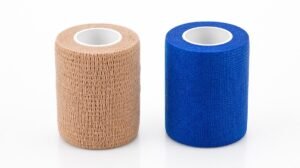
        Cohesive bandage: standard widths from 2.5 cm to 10 cm, with 4.5 m and 5 m lengths; typically white, skin tone, and black, with custom colours on request. Elastic weave with good stretch recovery, hand-tearable, no adhesive residue.

        A balanced opening order for most markets: EAB in 5 cm and 7.5 cm (volume) plus 2.5 cm (thumb/finger demand), and cohesive in 5 cm and 7.5 cm. Both product families support OEM customization — colours, tape printing, inner core printing, and packaging — so you can build either into a private-label line.

        Checklist Before You Order

        • Map your customers’ use cases: strong fixation demand (stock EAB) vs compression/gentle wrapping demand (stock cohesive)
        • Stock both lines — clinics and teams use both, and cross-selling raises basket size
        • Plan widths: 5 cm and 7.5 cm are the volume sellers in both categories
        • Choose colours and branding: custom colours, tape printing, core printing, packaging
        • Confirm MOQ, samples, and lead time with the factory before bulk commitment

        Build a Balanced Bandage Range

        Whether you are a medical distributor, a sports brand, or a gym retailer, carrying both EAB and cohesive bandage lets you serve the full range of customer needs — and turns a consumable into a reliable repeat-order line. ActiveX manufactures both elastic adhesive bandages and cohesive bandages with flexible MOQ, custom colours and printing, and export experience across more than 30 countries.

        Browse our bandage range on our Alibaba International Store, see the Elastic Adhesive Bandage page for full EAB specifications, or read our cohesive bandage sourcing guide for the details on sizes and customization. For samples and wholesale pricing, contact us at mani@activextape.com.

        Keep In Touch

        Fill in your details and we we’ll get back to you in no time..